TL;DR:
- Taiwan’s job market is driven by demand in tech, AI, and semiconductor sectors, especially for specialized skills.
- Success depends on Mandarin proficiency, cultural adaptation, and leveraging digital resources for relocation and networking.
- While offering fast PR pathways and affordable living, challenges include language barriers, lower salaries, and demanding work culture.
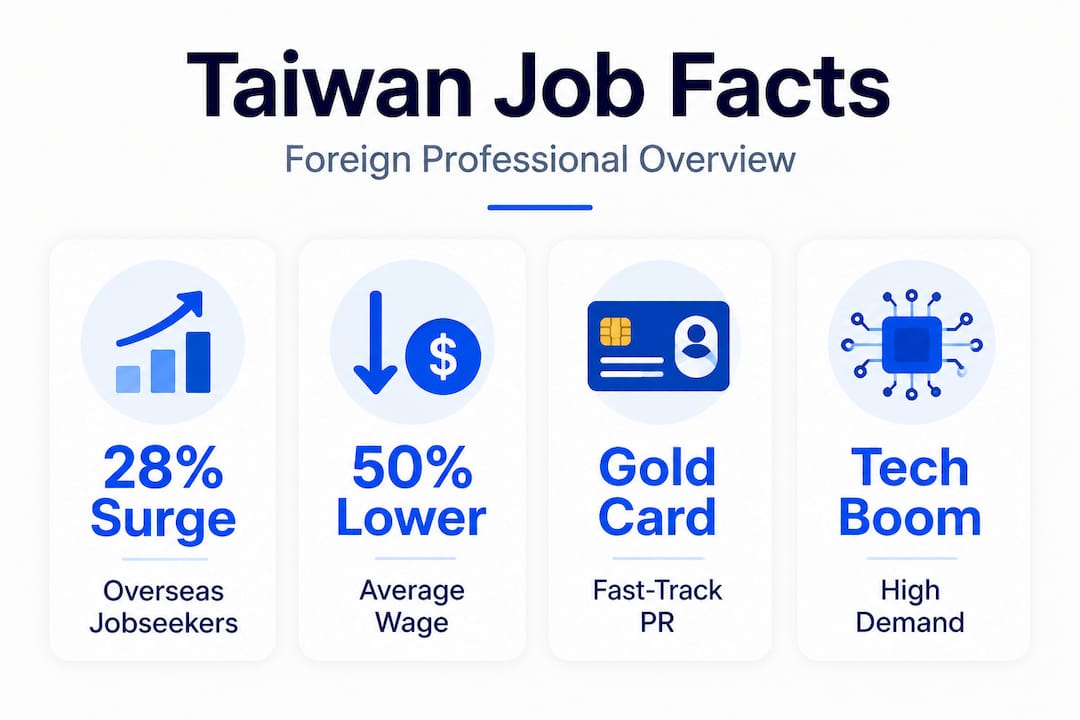
Taiwan is quietly becoming one of the most compelling destinations for internationally mobile professionals, and the numbers back it up. Overseas jobseeker numbers hit over 40,000 in 2025, a 28% jump on the previous year, driven by surging demand in tech, artificial intelligence, and semiconductor manufacturing. But the recruitment boom tells only half the story. Underneath the opportunity lies a job market where Mandarin proficiency, cultural fit, and specialist skills separate those who thrive from those who struggle. This guide unpacks both sides clearly.
Table of Contents
- Assessing the job market in Taiwan
- Pros of working in Taiwan
- Cons of working in Taiwan
- Lifestyle and practical considerations
- What most professionals get wrong about working in Taiwan
- Resources and support for your move to Taiwan
- Frequently asked questions
Key Takeaways
| Point | Details |
|---|---|
| Skill shortages drive demand | Taiwan actively seeks foreign professionals, especially in tech, AI, and semiconductors. |
| Mandarin proficiency is critical | Success and job options improve dramatically if you speak Mandarin. |
| Gold Card offers fast PR | Specialist migrants can access accelerated permanent residency and benefits under 2026 reforms. |
| Work culture challenges | Expect long hours and hierarchy, with limited work-life balance compared to Western countries. |
| Lifestyle adjustment needed | Navigating local culture, costs and urban dynamics is essential for a smooth relocation. |
Assessing the job market in Taiwan
With the rising numbers of foreign professionals, it’s worth looking closely at which sectors and skills are actually driving Taiwan’s employment push, and where genuine openings exist for internationally trained workers.
Taiwan’s economy has long been anchored by its dominance in semiconductor manufacturing, home to global giants like TSMC. But the current wave of demand goes further. Artificial intelligence, advanced engineering, fintech, and biosciences are all generating roles that Taiwanese employers cannot fill domestically. The government has responded with targeted policy reforms designed to streamline hiring from overseas, including faster work permit processing and expanded Gold Card eligibility criteria.
Here is a snapshot of the industries actively seeking foreign talent in 2026:
| Industry | Demand level | Mandarin required? |
|---|---|---|
| Semiconductors and chip design | Very high | Often yes |
| Artificial intelligence and machine learning | Very high | Preferred |
| English language teaching | High | No |
| Fintech and financial services | Moderate | Usually yes |
| Biosciences and pharmaceuticals | Moderate | Often yes |
| Creative and digital marketing | Moderate | Usually yes |
The key insight from that table is that English teaching remains the most accessible entry point for non-Mandarin speakers, but it also has the narrowest career ceiling. For professionals with AI job opportunities in their background, Taiwan’s market is genuinely competitive on a global scale right now.
Key market conditions to understand before you apply:
- Specialist tech roles in semiconductors, AI, and chip architecture are commanding premium salaries by Taiwan standards, though still below equivalent roles in the US or Australia
- English medium multinationals do exist, particularly in Taipei’s central business district, but they represent a fraction of available roles
- Government initiatives in 2026 specifically target AI engineers, data scientists, and advanced manufacturing specialists
- Mandarin proficiency at a conversational or professional level significantly expands your role options and signals cultural commitment to employers
- Foreign professionals searching for foreign jobs in Taiwan will find the most traction in tech, education, and international business development
The 28% surge in overseas jobseekers reflects genuine structural demand. Taiwan faces a demographic challenge, with an ageing workforce and a university graduate pipeline that cannot fully meet the needs of a rapidly expanding technology sector. That gap is your opportunity, if you have the right credentials.
Pros of working in Taiwan
After reviewing market trends and growth sectors, it’s time to weigh the strengths and advantages professionals can expect when relocating to Taiwan.
Taiwan’s appeal is real and multifaceted. The Gold Card programme, formally the Employment Gold Card, is one of the most attractive fast-track immigration options in Asia. Eligible professionals in fields like science, technology, economics, education, and finance can obtain a combined work permit and residency visa valid for one to three years. Crucially, 2026 Gold Card reforms have accelerated the pathway to permanent residency, cutting the traditional five-year wait for many specialist applicants.
Key advantages of working in Taiwan:
- Gold Card fast-track PR: Skilled professionals in priority fields can access an accelerated residency pathway, reducing long-term immigration uncertainty
- Cost of living: Taipei is genuinely affordable by global city standards. Monthly rent for a central one-bedroom apartment sits roughly 30 to 40% lower than Sydney or London
- Modern urban infrastructure: Taipei’s metro system is one of the cleanest and most punctual in Asia, reducing commute friction significantly
- Healthcare access: National Health Insurance (NHI) covers most employed foreign workers from day one, offering hospital and specialist care at a fraction of Western costs
- Food culture: A practical but real benefit. Taiwan’s street food and restaurant culture means professionals can eat well on a very modest daily budget
- English teaching entry point: For recent graduates or career changers, TEFL-qualified English teachers can secure roles without Mandarin, providing a foothold to explore longer-term options
“Taiwan is aggressively attracting skilled professionals via Gold Card and 2026 reforms to address labour shortages in tech and AI, offering fast PR paths and benefits, but success hinges on Mandarin proficiency and specialised skills.” Taipei Times
The comparison below puts Taiwan’s working proposition alongside two common alternatives for internationally mobile professionals:
| Factor | Taiwan | Singapore | Australia |
|---|---|---|---|
| Fast-track PR option | Yes (Gold Card) | Yes (EP to PR) | Yes (skilled visas) |
| English sufficiency | Partial (cities only) | Yes | Yes |
| Cost of living | Low to moderate | High | High |
| Tech job market | Very strong | Strong | Strong |
| Average monthly salary (tech) | AUD 3,500 to 5,500 | AUD 6,000 to 10,000 | AUD 7,000 to 12,000 |
Pro Tip: If you qualify for the Gold Card, apply before arriving. Processing times have shortened, and holding active Gold Card status when you attend interviews signals to Taiwanese employers that you are serious and legally cleared to work immediately. Pair that with even basic Mandarin and you move into a significantly more competitive applicant pool.
For a deeper look at your options, the Taiwan skilled careers guide covers visa pathways and role categories in detail, while Taiwan relocation resources maps out the full relocation picture.
Cons of working in Taiwan
Despite the clear benefits, there are some persistent drawbacks that professionals need to plan for before making the move.
No market is without its friction points, and Taiwan has several that catch internationally mobile professionals off guard. Understanding them before you commit saves significant frustration later.
The language barrier is the biggest single obstacle. Outside Taipei’s main business corridors, Mandarin dominance means daily tasks from reading a lease contract to navigating a government office require either a Mandarin-speaking colleague or a translation app. This is not just inconvenient. It actively limits the roles available to you and the speed at which you integrate.
Salary expectations need resetting. Taiwan’s wages, even in high-demand tech roles, are significantly lower than equivalent positions in Australia, the UK, or North America. A senior software engineer earning AUD 120,000 in Sydney might earn the equivalent of AUD 55,000 to 70,000 in Taipei. The lower cost of living partially offsets this, but for professionals with student debt in Western currencies, the maths requires careful modelling.
Work culture can be demanding. Taiwan’s corporate environment, particularly in manufacturing, finance, and traditional industries, is characterised by long hours and strong hierarchy. Overtime is common and, in many organisations, expected regardless of formal contract terms. Junior employees are generally expected to defer to seniority, which can feel constraining for professionals from more flat-structured workplaces.
A summary of the primary cons:
- Mandarin barrier: Roles outside teaching and some tech functions are largely inaccessible without Mandarin at a working level
- Lower salaries: Tech salaries are competitive locally but trail Western benchmarks by 30 to 50%
- Discrimination risk: Non-white English teachers can face hiring bias, with some employers explicitly preferring candidates from specific Western countries
- Hierarchy and overtime: Workplace culture rewards longevity and compliance over individual initiative in many traditional organisations
- Limited English support outside Taipei: Rural and suburban areas have minimal English signage, services, or peer networks
Steps to offset these challenges:
- Commit to at least beginner Mandarin study before arriving. Apps like HelloChinese or a structured online course signal genuine intent and help immediately with daily life
- Model your net salary in Taiwanese dollars against local expenses, not your home currency, to assess real quality of life accurately
- Research company culture before accepting any role. Tech startups and multinationals often have more flexible environments than established Taiwanese firms
- Build your expat network early. Online communities and platforms specifically for foreign professionals in Taiwan are active and genuinely helpful for navigating the practical gaps
For a realistic breakdown of your financial picture, the Taiwan cost of living guide is worth reviewing before you finalise any job offer.
Lifestyle and practical considerations
The practical aspect of day-to-day life is just as important as career prospects, so let’s look at what actually shapes the experience of living and working in Taiwan.

Urban versus rural living is a genuine divide. Taipei is the overwhelming hub for foreign professionals, offering English-friendly restaurants, international schools, expat meetups, and a public health system that works smoothly. Taichung and Kaohsiung are growing alternatives with lower rents and emerging tech scenes, but English-language services thin out considerably once you leave Taipei’s core districts.
Housing is affordable relative to other major Asian cities, but the market moves quickly. A furnished apartment in Taipei’s Da’an or Xinyi districts typically costs between NT$20,000 and NT$35,000 per month (roughly AUD 900 to AUD 1,600). That is meaningfully cheaper than comparable locations in Singapore or Sydney. Most foreign professionals find shared housing platforms and Facebook groups more effective than formal real estate agents, at least for the initial search.
Cultural adaptation takes deliberate effort. Face-saving communication norms, deference to seniority, and indirect conflict resolution are embedded in most Taiwanese workplaces. Foreign professionals who interpret indirect feedback as approval, or who push back on decisions publicly, can unintentionally damage working relationships. Observing how colleagues communicate and mirroring those norms early on is more effective than trying to shift the culture.
Practical lifestyle factors to account for:
- Public transport: Taipei’s MRT is exceptional. Scooter hire is common for suburban areas and very affordable
- Healthcare: NHI coverage typically begins after completing the standard probation period. Private top-up insurance is worth considering for the gap period
- Air quality: Northern Taiwan has periods of poor air quality, particularly in winter months when pollution from mainland China reaches the island. A quality air purifier for your apartment is a reasonable investment
- Work-life balance: The intensity of Taiwan’s work culture is real. Setting clear boundaries early is harder but more effective than trying to renegotiate later. Tech startups tend to be more receptive to this than traditional firms
- English availability: Outside urban centres, navigating daily life without Mandarin becomes genuinely difficult. Plan for this before committing to a role in a smaller city
Pro Tip: Use the expat relocation tools available through BRIGENAI to model your total cost of relocation against your offered salary before signing a contract. Many professionals underestimate one-time moving costs, apartment bond requirements, and the gap between first arrival and first paycheck. A six-week cash buffer is the minimum you should carry.
You can also use the living costs in Taiwan resource to stress-test your financial planning against real market figures.
What most professionals get wrong about working in Taiwan
Here is a perspective you won’t find in most guides or job forums, and it matters more than almost anything else in this article.
Most professionals researching Taiwan fixate on two things: the Gold Card and the tech boom. Both are real. But treating either of them as the centrepiece of your strategy is how careers in Taiwan plateau early. The professionals who genuinely build momentum here, the ones who get promoted, shift from local employer to multinational, or build the professional network that opens doors regionally, almost universally share one characteristic. They invested in Mandarin.
This is not about becoming fluent before you arrive. That takes years. It is about signalling genuine commitment through visible effort. Taiwanese colleagues and managers notice when a foreign professional attempts the language, and they respond to it in ways that reshape your access to informal networks, project opportunities, and client relationships.
The second thing professionals underestimate is the intensity of the working environment. You can find this fact in almost every guide. But reading it and living it are different experiences. The 2026 reform wave has opened doors and streamlined visa pathways, but it has not changed workplace norms. Arriving with Western expectations around work-life separation and trying to impose them immediately tends to generate friction rather than respect.
The third blind spot is the English teaching trap. Teaching English is a legitimate and often financially comfortable entry point, but professionals who spend two to three years in classroom roles and expect that experience to translate into corporate advancement in Taiwan are regularly disappointed. The Taiwan job market insights consistently show that teaching experience does not carry weight in tech or business hiring decisions. If your long-term goal is a professional career in Taiwan, plan your English teaching stint as a maximum twelve-month bridge, not a career.
The professionals who do well in Taiwan are the ones who arrive with realistic expectations, a plan to build language capability, and the self-awareness to observe and adapt to cultural norms before trying to change them.
Resources and support for your move to Taiwan
Armed with pros, cons, and an honest sense of what the experience actually involves, the next step is getting the right support structure in place before you land.

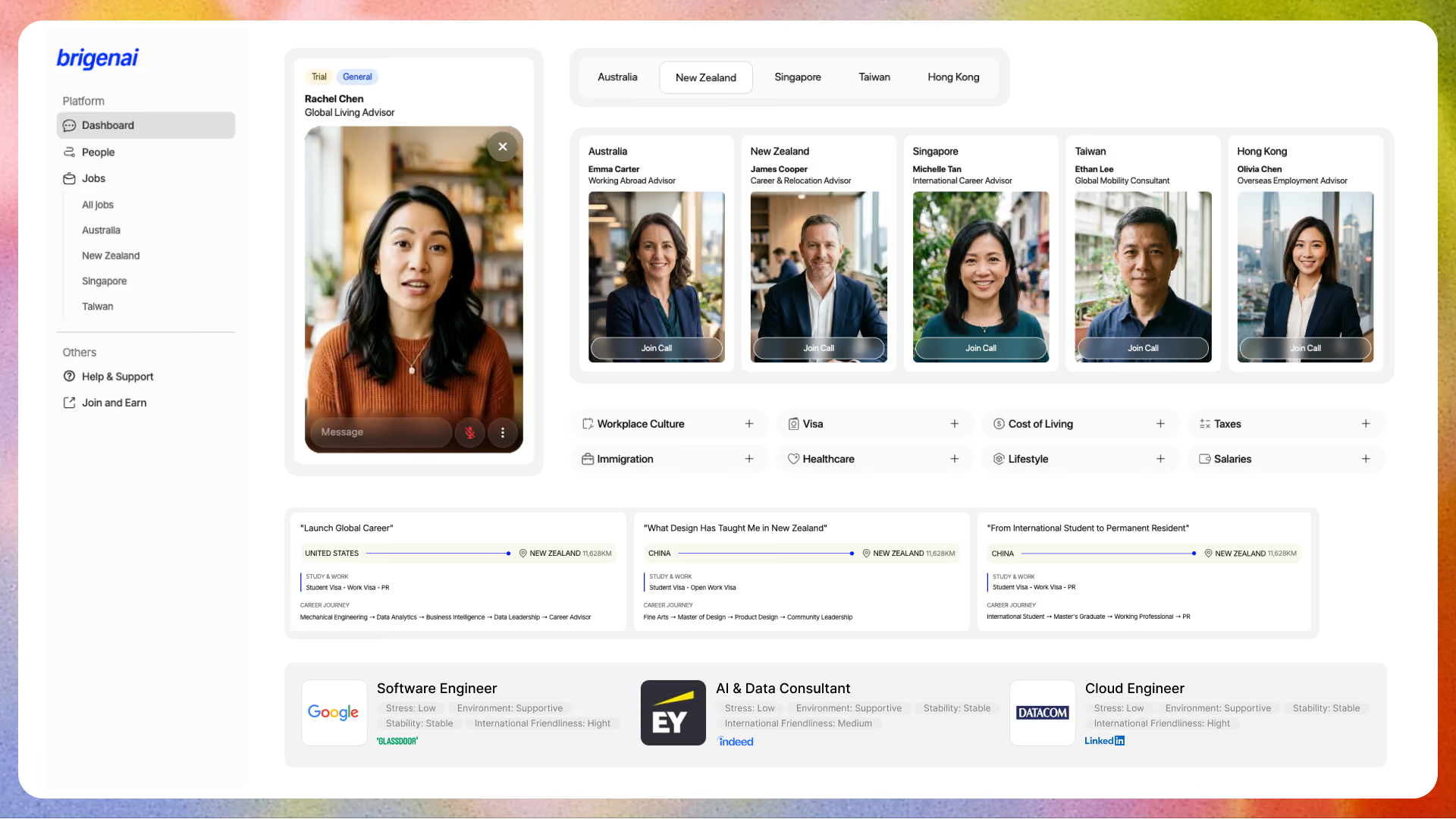
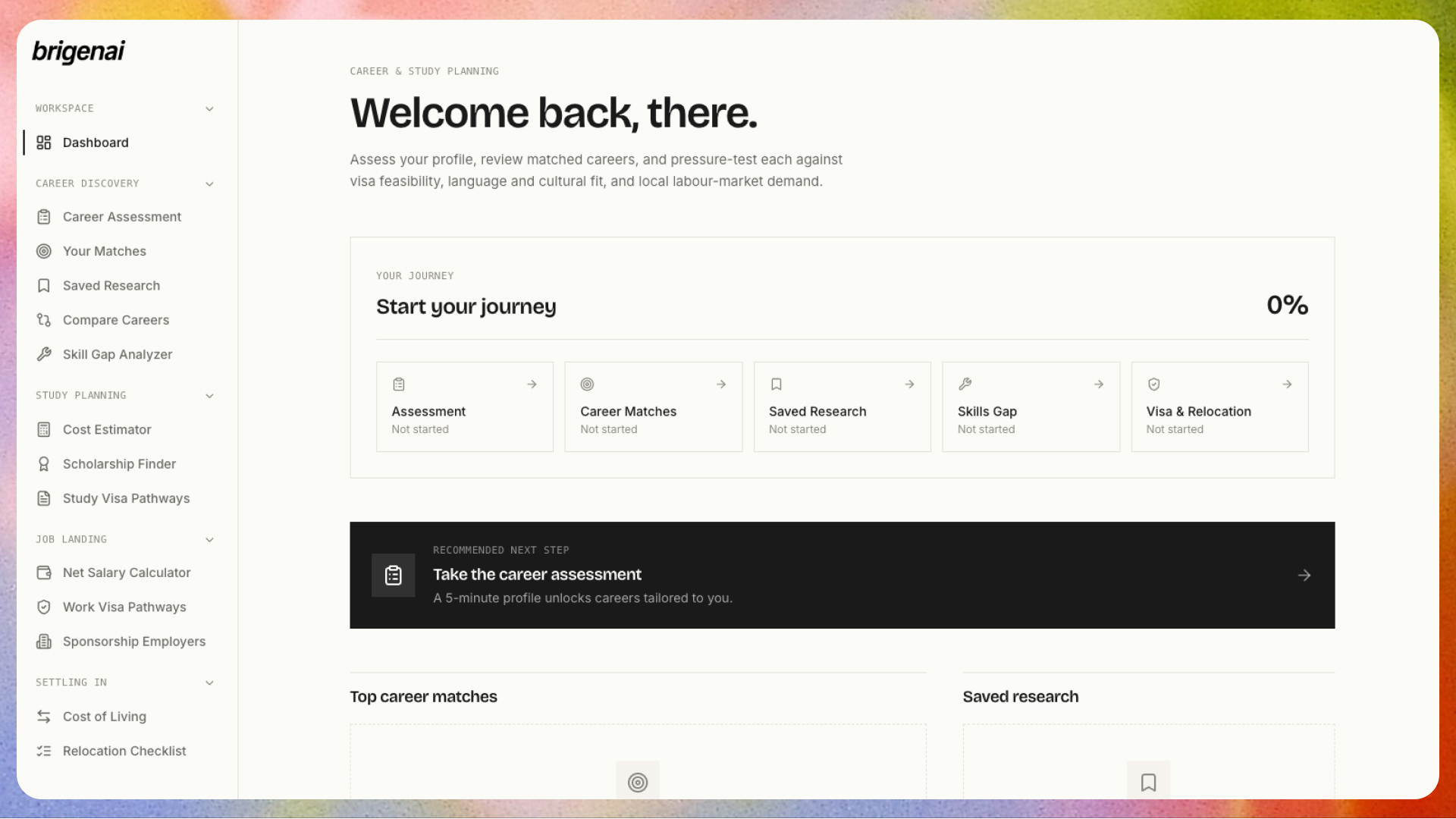
BRIGENAI’s platform is built specifically for professionals navigating exactly this kind of decision. Whether you are comparing Taiwan against Singapore or New Zealand, trying to understand Gold Card eligibility, or searching for sponsored tech roles with a clear immigration pathway, the platform brings together AI-structured guidance and real advisor expertise in one place. Our daily-updated job board for Taiwan identifies roles with visa sponsorship pathways clearly marked, so you are not wasting time on positions that won’t support your relocation. Salary guides, visa documentation checklists, housing cost comparisons, and one-on-one sessions with advisors who have actually relocated to Taiwan are all accessible through a single platform built for serious movers.
Frequently asked questions
Do I need to speak Mandarin to get a job in Taiwan?
Mandarin is essential for most roles outside English teaching and some tech positions. Limited English outside cities means non-Mandarin speakers face significantly narrowed options and slower workplace integration.
Is it true Taiwan offers fast permanent residency for skilled professionals?
Yes. Taiwan’s Gold Card system provides an accelerated PR pathway for tech and highly skilled professionals, with 2026 reforms further streamlining eligibility and reducing waiting periods for qualified applicants.
What is the average salary for foreign professionals in Taiwan?
Wages in Taiwan are generally 30 to 50% below Western benchmarks, particularly for non-tech roles. The job market for non-teachers without Mandarin is competitive, and salaries reflect the lower local cost of living rather than international market rates.
Is the work culture in Taiwan stressful?
Yes. Taiwan’s corporate environment is characterised by long hours and hierarchy, with overtime normalised across many industries. Work-life balance varies significantly between multinationals, tech startups, and traditional Taiwanese firms.
What are the main challenges in relocating to Taiwan for work?
Language barriers are the primary challenge, followed by salary adjustments and cultural adaptation. Mandarin dominance across most professional settings means non-speakers face real restrictions on role access and career mobility from the outset.