
1. Starting the planning process too late
This is the most common moving error people make, and it costs them in every other area that follows. Planning 56 days ahead is the industry gold standard for a reason. Eight weeks gives you enough time to research and book reputable movers, sort visa paperwork, notify government agencies, and pack methodically without destroying your home in a weekend.
International moves carry layers of complexity that domestic ones simply do not. You are coordinating shipping containers, customs declarations, potential quarantine requirements, and arrival timelines across time zones. When you compress that into two or three weeks, every step gets rushed and every rushed step creates a problem downstream.
Set up what experienced movers call a “Moving Command Centre.” This is a single folder, physical or digital, where you keep all contracts, quotes, contact details, and timelines. Managing finances with a dedicated system like this keeps you from losing track of deposits paid, services booked, and tasks still outstanding.
Pro Tip: Use a shared digital workspace like Notion or Google Drive so a partner or family member can contribute to the move checklist in real time. Assign owners to each task so nothing falls through the cracks.
2. Underestimating the true cost of moving
Budget errors are among the most painful mistakes to avoid when moving internationally, because they tend to surface at the worst possible moment. Most people take the first or cheapest quote they receive and treat it as a fixed number. It rarely is.

Cheapest carriers often add unexpected fees for stairs, long carries, fuel surcharges, and customs handling. A non-binding estimate gives the mover room to revise charges on the day. A fully itemised, binding estimate from at least three verified carriers protects you far better.
Beyond the moving company, consider these commonly overlooked costs:
“The move itself is rarely your biggest expense. The surprises are. Always set aside 10 to 20 per cent above your total quote as a contingency fund before you sign anything.”
3. Packing with the wrong materials and no system
Nearly 50% of movers admit to last-minute packing, and the consequences are predictable. Broken items, lost belongings, and an unpacking experience that feels like a disaster site.
Here is a quick comparison of packing approaches that highlights why materials matter:
ApproachRisk levelRecommended forRecycled grocery boxesHigh: collapse under weightNothing. Avoid entirely.Professional-grade moving boxesLow: 30% less likely to collapseAll general household itemsWardrobe boxes with hanging railLowClothing, formal wearCustom cratingVery lowArtwork, antiques, large screens
For fragile items, the technique matters as much as the box. Pack plates vertically, like records in a crate. Vertical plate packing distributes impact along the edges rather than across the flat surface, which is where cracking begins. For electronics, use anti-static bubble wrap combined with silica gel packets to guard against moisture damage in transit. Towels, socks, and jumpers can cushion breakables and reduce how much bubble wrap you actually need.
Labelling is where most people take shortcuts they later regret. The two-sided labelling system used by professional movers marks each box with the destination room on one side and a priority number (1 for unpack first, 3 for unpack last) on the other. This alone cuts unpacking time significantly.
Pro Tip: Before you disassemble any entertainment unit or desk setup, photograph all cable configurations from multiple angles. Reinstalling them from memory three weeks later in a new country is far harder than it sounds.
4. Ignoring administrative and legal obligations
This is the category of mistakes that carries the most serious consequences. People are so focused on the physical move that they defer the paperwork until after they arrive. By then, deadlines have passed and penalties are already accumulating.
Failing to update your driving licence and vehicle registration within the required timeframe in your new jurisdiction can result in fines of up to £1,000. Each country has its own deadline, and some are shorter than you would expect. The same applies to blocking public walkways during loading without a permit.
The administrative checklist that most international movers miss includes:
Do this at least two weeks before your departure date. Trying to manage it from overseas, across different time zones, with inconsistent internet access is a genuinely miserable experience.
5. Choosing vendors based on price alone
Moving pitfalls often begin with the vendor selection process. The logic seems sound: get multiple quotes and go with the lowest one. The problem is that the moving industry, particularly in the international segment, has enormous variation in service quality and contract transparency.
A moving company you find through a quick search may be a broker rather than a carrier. That means they will sell your job to a third-party operator you have never vetted. Your belongings may change hands multiple times between your front door and your destination port. Checking reviews on independent platforms, verifying insurance coverage, and asking specifically whether the company is the actual carrier are all steps that can save you serious grief.
You can find solid guidance on avoiding vendor selection errors that apply just as well to physical relocation as to professional moves. The principles are the same: verify credentials, read the contract carefully, and never sign a non-binding estimate.
6. Failing to prepare emotionally for the adjustment period
Most relocation guides, including those written by experienced relocation specialists, note that this is the mistake people feel most blindsided by. The logistics were handled well. The boxes arrived. The job started. And then, several weeks in, something feels off.
Adjustment to a new country is a real and well-documented process. Here is what the timeline actually looks like for most international movers:
Knowing this timeline in advance changes how you interpret your experience. If you hit the friction phase and expect it, you do not catastrophise. If you hit it without warning, it can feel like a crisis.
Purposeful social integration matters here. Joining a local club, attending community events, or connecting with expat groups specific to your profession gives you a social structure while your natural friendships are still forming. Balance that with maintaining regular contact with people back home, but do not let home connections become a substitute for building local ones.
My honest take on what actually matters most
I have seen people plan the most logistically perfect international move imaginable and still have a genuinely hard time on the other side. And I have seen people who lost a box of kitchen goods and booked the wrong flight but settled beautifully within six months.
The difference almost always comes down to emotional preparation, not operational detail. People invest hundreds of hours in packing lists and not a single hour in thinking honestly about what they will miss, what will frustrate them, and what kind of social scaffolding they will need in the first year. That imbalance shows up quickly once the adrenaline of the move itself wears off.
My view on vendor selection is also probably more conservative than most advice you will read. I think spending more on a reputable, fully insured carrier with transparent contracts is almost always worth it. The people who chose the cheaper option and had a bad experience do not write articles about how glad they are that they saved $400.
The administrative tasks are the least glamorous part of any move, but they are the ones that generate the worst downstream consequences when skipped. Start the checklist before anything else is packed.
How Brigenai helps you relocate with less guesswork
Planning an international move involves more variables than most people realise until they are already in the middle of it. Brigenai is built specifically for this situation.
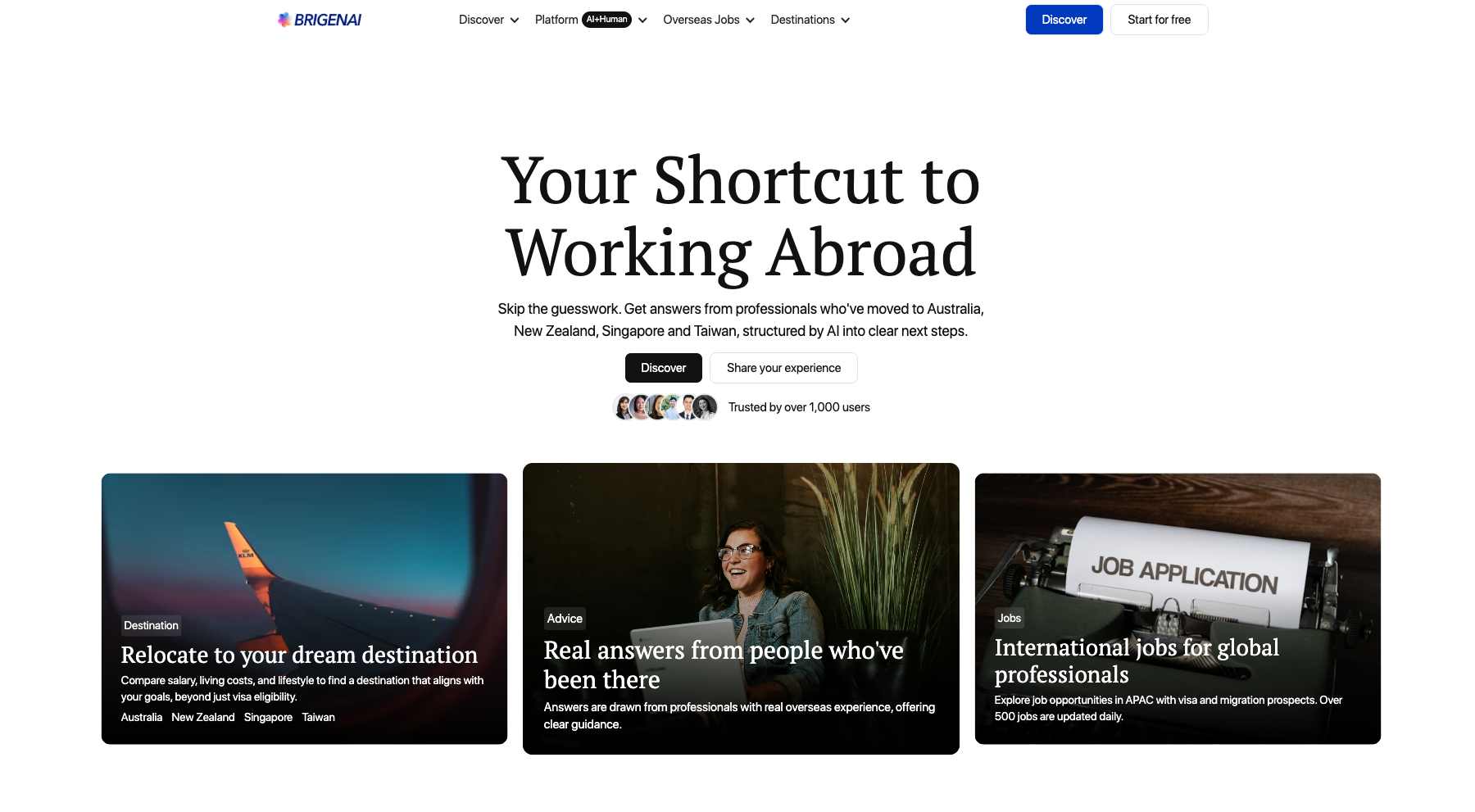
The international relocation checklist on Brigenai gives you a structured, step-by-step system to track every task from eight weeks out to your first month in a new country. The expat tools hub covers budgeting, cost of living comparisons, and salary benchmarks for destinations including Australia, New Zealand, Singapore, and Taiwan. If your move is tied to a work visa, the skills list tool maps occupation lists for Australian and New Zealand visa pathways so you understand exactly where you stand before you apply. These are not generic guides. They are built from real experiences contributed by people who have already made the move you are planning.
FAQ
How far in advance should I plan an international move?
The recommended timeframe is at least eight weeks, or 56 days, before your moving date. Starting earlier gives you time to book reputable carriers, sort visa documentation, notify government agencies, and pack without rushing.
What is a realistic budget buffer for an international move?
Set aside 10 to 20 per cent above the total moving quote to cover unexpected charges. International moves regularly include customs fees, fuel surcharges, and temporary accommodation costs that most initial quotes do not include.
How long does it take to adjust to living in a new country?
Most people feel genuinely settled after 6 to 12 months and reach deeper cultural comfort after 2 to 3 years. Expecting a difficult adjustment phase in the first few months makes it significantly easier to manage when it arrives.
What is the biggest administrative mistake international movers make?
Deferring address updates and licence transfers until after arrival is the most common error. Many jurisdictions have strict deadlines for updating your driving licence and vehicle registration, and missing them can result in significant fines.
Should I pack myself or hire professional packers?
For an international move, professional packing is worth the cost for fragile and high-value items. If you pack yourself, use professional-grade boxes, pack plates vertically, and photograph all cable setups before disassembly to avoid reinstallation problems.